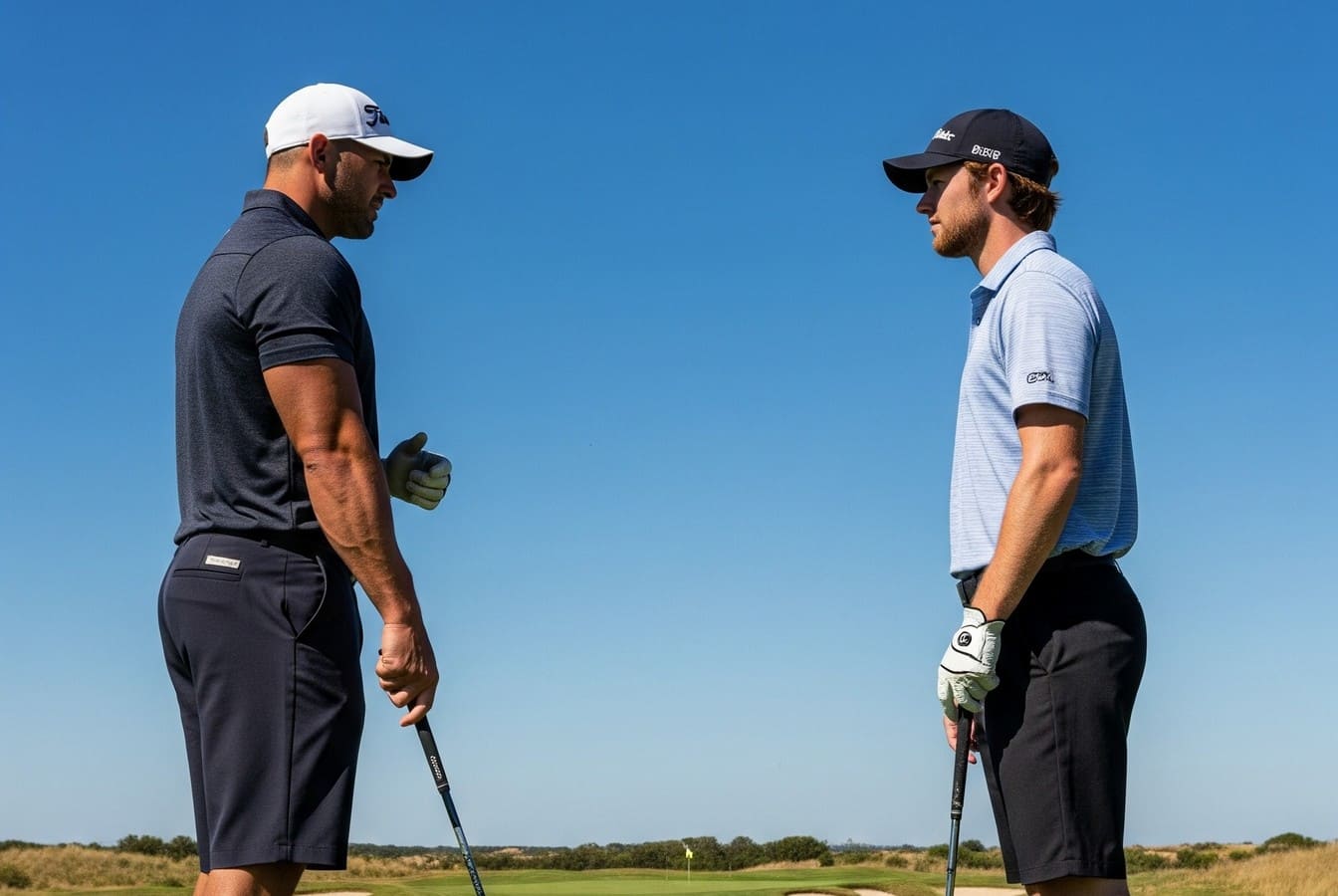
Gaining the strength to progress in golf, a real asset or a good idea gone wrong? Many golfers dream of increasing their strength by adding muscle mass, believing that this will result in longer shots. However, behind this search for power lies an important debate: by sacrificing increased volume, aren’t we risking sacrificing the flexibility and fluidity that are essential in the swing? Between the obvious advantages and mistakes to avoid, where is the real key to improving your game through physical preparation?
Does strength come from muscle volume or specific strength?
It’s tempting to imagine that the more muscle you gain, the greater the power of your punches. But professional golfers insist that functional strength is far more important than just muscle volume. The body requires well-distributed strength tailored to specific golf movements, especially in the core, legs and back muscles.
Golfers like Bryson DeChambeau have increased their strength by radically changing their physique, but this requires careful monitoring. Loads that are too heavy can disrupt the body’s mobility and balance when swinging, thus having a negative impact on precision.
Therefore, the key is to choose exercises that develop strength and explosive power without sacrificing flexibility and control.
What muscles should you train to avoid ruining your swing?
Golf primarily uses the core muscles (abs, hips), glutes, and muscles that allow good trunk rotation. Strengthening this area increases the stability and power of the blow.
On the other hand, muscles that are too large such as the chest muscles or biceps can limit freedom of movement. Exercises that create muscle imbalances, a source of tension and pain, should be avoided.
Proper physical preparation includes:
- Core exercises to stabilize the torso
- Movements that increase hip mobility
- Explosive exercises to increase speed
Classic indoor mistakes that punish golfers
Exercising at the gym can be counterproductive if you only focus on physical strength. Using machines that limit movement or lifting too heavy weights with improper technique can reduce the quality of the swing.
Certain isolated exercises, which focus too much on antagonistic muscles or non-essential muscle groups, can impair coordination and flexibility. It is important to reproduce movements similar to golf movements to maintain natural dynamics and avoid injury.
A poorly designed program can cause strain on the shoulders, back, or even change the tempo of the swing.
For whom is gaining muscle mass risky?
Players with slim bodies or seniors should be wary of gaining mass too quickly which risks reducing joint mobility. This can also unbalance the game based on finesse, precision, or slightly cautious play.
Additionally, a tough physical transformation requires a strong commitment in terms of time and nutrition, which can distract from the golf practice session itself. Without proper supervision, the risk of injury increases.
Golfers who primarily want to increase distance can benefit from targeted, progressive strengthening, while maintaining overall body balance.
What training should you choose to perform well in golf?
The most important thing is to encourage functional training that improves body strength, mobility, coordination and speed. Increasing mass is not the end goal.
Sessions that combine core exercises, stretching, and dynamic exercises are recommended. Each golfer must adapt his program according to his profile, goals and physical constraints.
Consulting a physical trainer who specializes in golf allows you to avoid mistakes and maximize benefits, while maintaining a smooth and powerful swing.
Gaining muscle can help, but not just any way or for everyone. Specific strength and balance remain the keys to golf success.
Agen Togel Terpercaya
Bandar Togel
Sabung Ayam Online
Berita Terkini
Artikel Terbaru
Berita Terbaru
Penerbangan
Berita Politik
Berita Politik
Software
Software Download
Download Aplikasi
Berita Terkini
News
Jasa PBN
Jasa Artikel
News
Breaking News
Berita